Position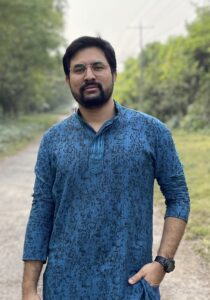
Assistant Teaching Professor
Office
201-C Information Technology and Engineering (ITE) Building
Contact Information
University of Maryland, Baltimore County
1000 Hilltop Circle
Baltimore, MD 21250
email:ksolaima@umbc.edu
website: Personal Website
Education
Ph.D. in Computer Science, Purdue University, 2023
M.Sc. in Computer Science, Purdue University, 2022
B.Sc. in Computer Science and Engineering, Bangladesh University of Engineering and Technology (BUET), 2014
Research Areas
Dr. Solaiman’s research lies at the intersection of Robust Machine Learning, Multimodal Reasoning, and Human-Centered AI, with applications in uncertainty management and explainable decision systems. He directs the Human-Aligned, Resilient, Multimodal, Open-Ended, Novelty-Informed Intelligence (HARMONI) Lab at UMBC, which works on developing systems that can adapt to novelty, align across modalities, and support real-world decision-making with interpretable AI for domains such as media, public health and safety, and smart infrastructure.
Lab Website
Publications
Biography
Dr. KMA Solaiman is an Assistant Teaching Professor in the Department of Computer Science and Electrical Engineering at the University of Maryland, Baltimore County (UMBC), researching resilient and human-aligned artificial intelligence, with an emphasis on multimodal reasoning and uncertainty modeling. His work spans areas such as multimodal information retrieval, explainable bias detection, graph-based novelty reasoning, and adaptive AI for critical domains like smart grids and triage systems. At UMBC, he teaches core AI and ML courses (CMSC 471, CMSC 478, CMSC 678) with an emphasis on inclusive teaching practices, industry norms, and active learning.
Dr. Solaiman completed his Ph.D. and M.Sc. in Computer Science from Purdue University, where he worked with Dr. Bharat Bhargava and Dr. Michael Stonebraker. He contributed to the Defense Advanced Research Projects Agency (DARPA) and Northrop Grumman (NGC) funded efforts under the Science of Artifical Intelligence and Learning for Open-World Novelty (SAIL-ON) and Research in Applications for Learning Machines (REALM) programs, collaborating with institutions such as Massachusetts Institute of Technology (MIT), Institute for Defense Analysis (IDA), University of Southern California – Information Sciences Institute (USC-ISI), and the West Lafayette Police Department. His work has appeared in top venues like the International Conference on Very Large Data Bases (VLDB), the Special interest Group on Management of Data (SIGMOD), the Association for the Advancement of AI (AAAI), and the Institute of Electrical and Electronic Engineering (IEEE) Journals.